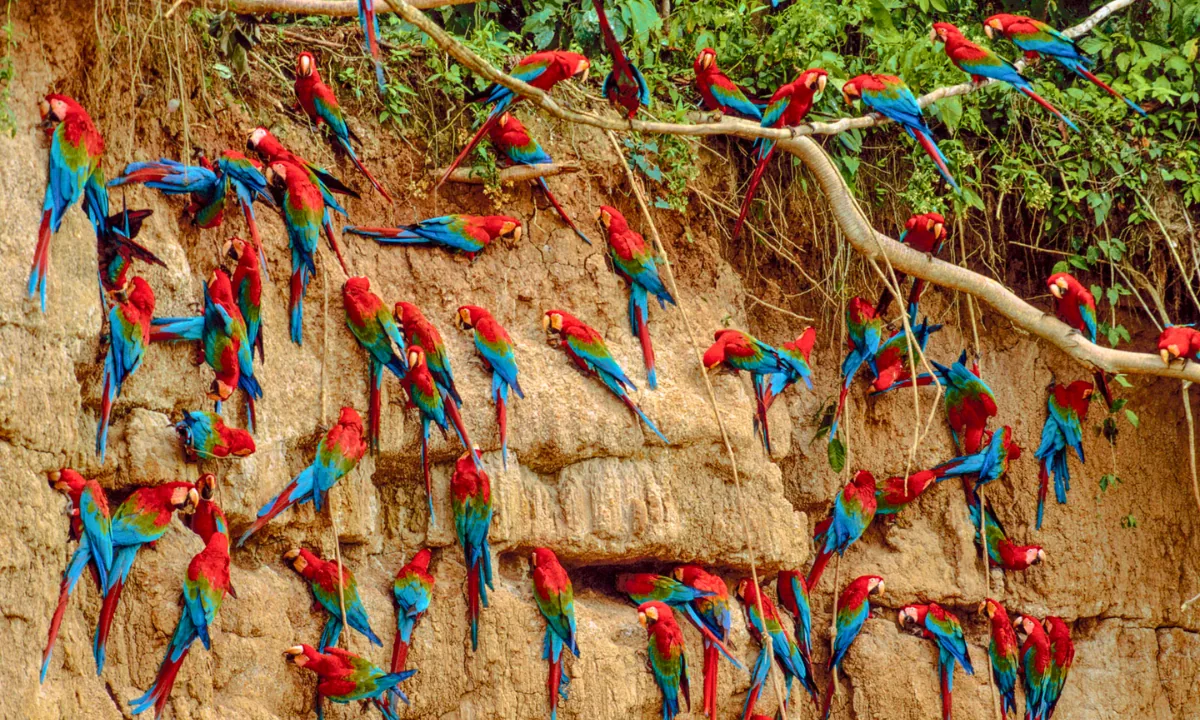
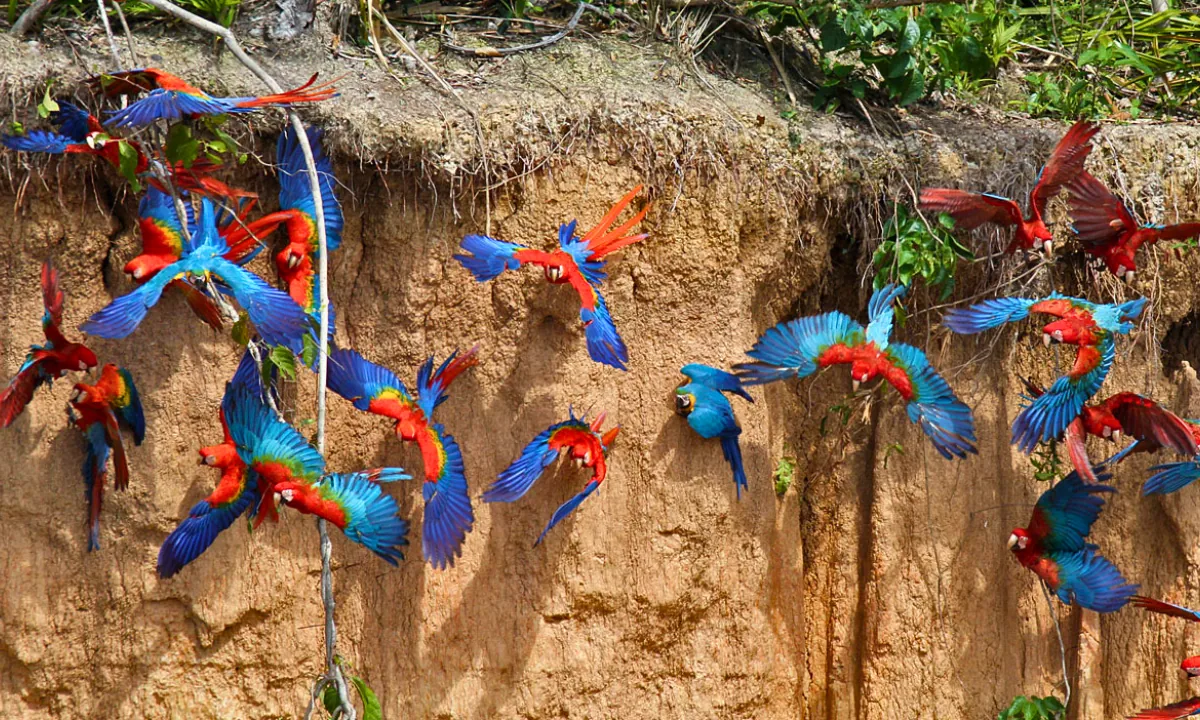
The Tambopata Macaw Clay Licks are clay cliffs rich in salt in the Peruvian rainforest, where dozens of parrots and macaws gather every morning. In Tambopata, in the Madre de Dios region, the clay licks offer an impressive spectacle as hundreds of macaws, along with other parrots and parakeets, arrive at dawn to feed on mineral-rich clay. In this Tambopata Macaw Clay Lick travel guide, we explain what these places are, where they are located, which tours we recommend, the best time to visit, and more.
What Are Macaw Clay Licks?
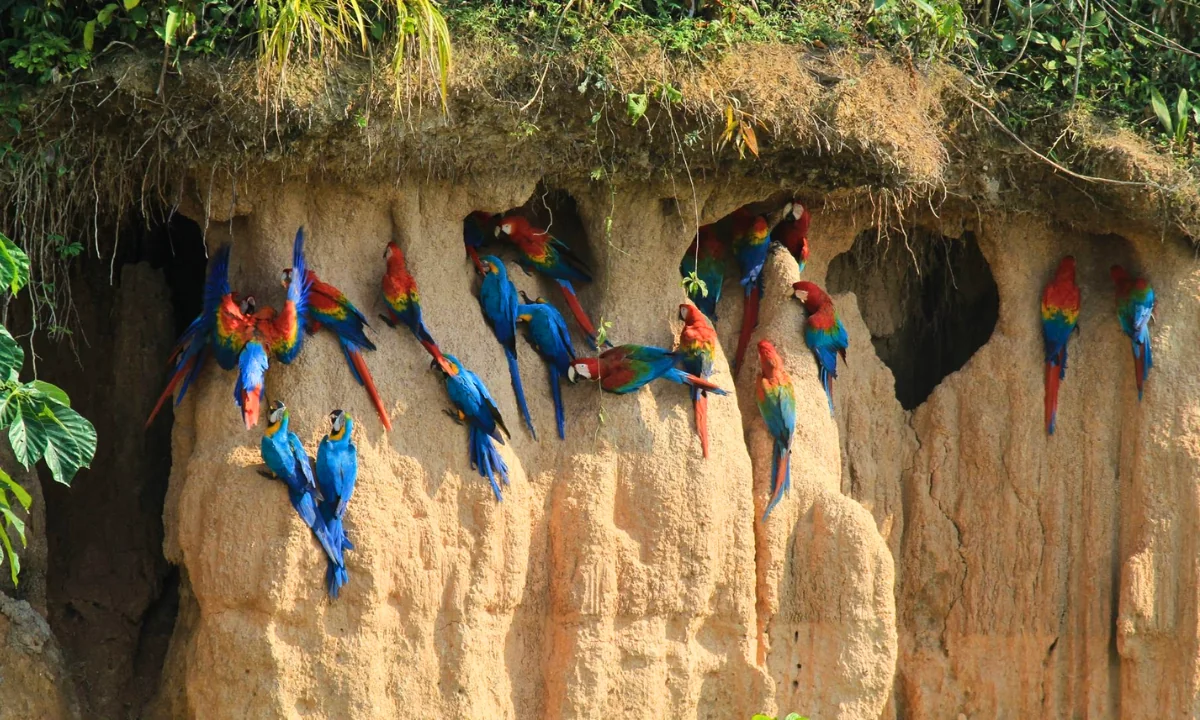
A clay lick is a cliff made of mineral-rich clay soil. Its name comes from the Quechua word qolpa, which means «salty earth.» At these sites, birds and other animals consume clay to obtain essential minerals, such as sodium.
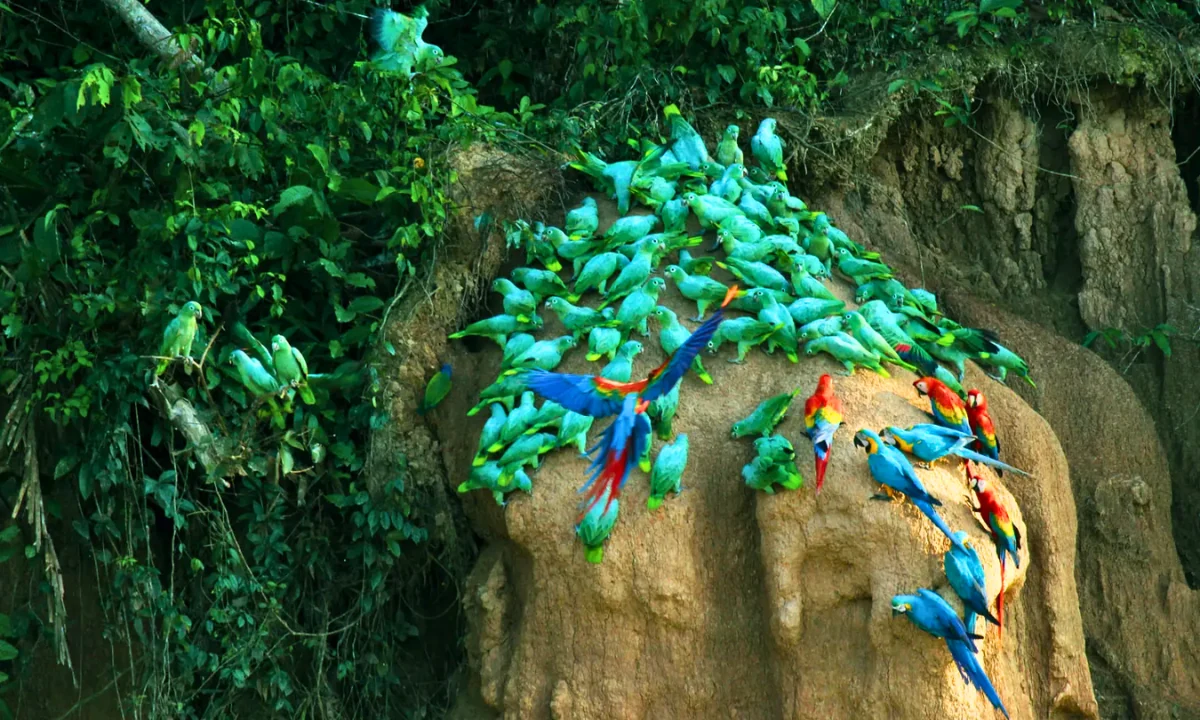
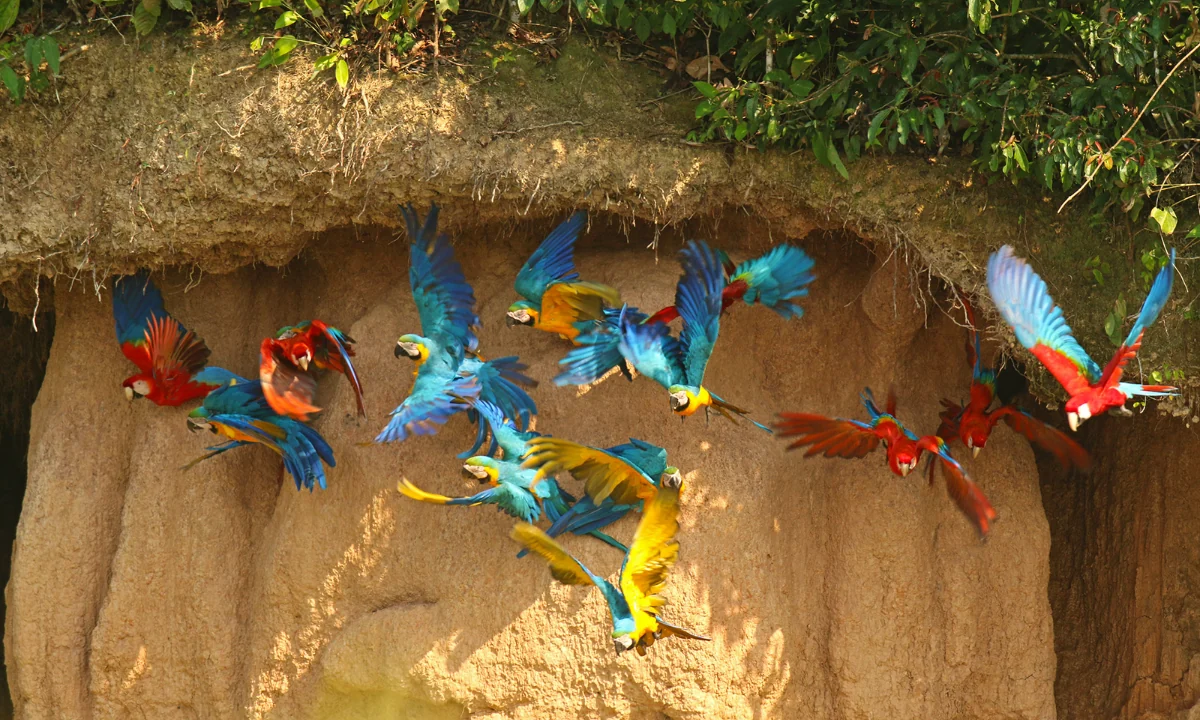
In Tambopata, macaw clay licks are well known because hundreds of birds gather on their walls at dawn to consume clay. There, you can observe scarlet macaws, blue-and-yellow macaws, parrots, and parakeets, which obtain minerals such as sodium by ingesting the clay from these walls.
Where Are the Macaw Clay Licks in Tambopata?
The main macaw clay licks are located in the Madre de Dios region, in southeastern Peru. Among the best known are the Chuncho Clay Lick and the Colorado Clay Lick, located in the Tambopata River basin, where numerous species of parrots and macaws gather. The Hermosa Clay Lick and 8 Gallinas Clay Lick are also noteworthy.
From Puerto Maldonado, boat excursions along the Tambopata River are organized to visit these clay licks, which are surrounded by Amazon rainforest vegetation.
Tours to Visit the Macaw Clay Licks in Tambopata
Several agencies offer guided tours to the macaw clay licks. Below, we recommend three ideal options.
- 3-Day / 2-Night Tour (Chuncho Clay Lick & Sandoval Lake): Visit the Chuncho Clay Lick at dawn to watch macaws, parrots, and parakeets feeding on clay. The itinerary also includes Sandoval Lake, where you can observe giant otters, turtles, and caimans, as well as take a nighttime excursion.
- 4-Day / 3-Night Tour (Macaws, Lake & Wildlife): In addition to visiting the Chuncho Clay Lick and Sandoval Lake, this itinerary includes a 50-meter-high observation tower, where you can take in views of the rainforest and observe birds and other wildlife.
- 5-Day / 4-Night Tour (Explore Tambopata): This is a more comprehensive option that combines the Chuncho Clay Lick and Sandoval Lake with guided rainforest hikes, traditional fishing, and visits to a mammal clay lick in an attempt to spot tapirs, peccaries, and other animals. It also includes wildlife observation activities and opportunities to learn about local culture.
This Tambopata Macaw Clay Lick travel guide will help you choose the best tour based on the time you have available.
What Is the Best Time to Visit the Tambopata Clay Licks?
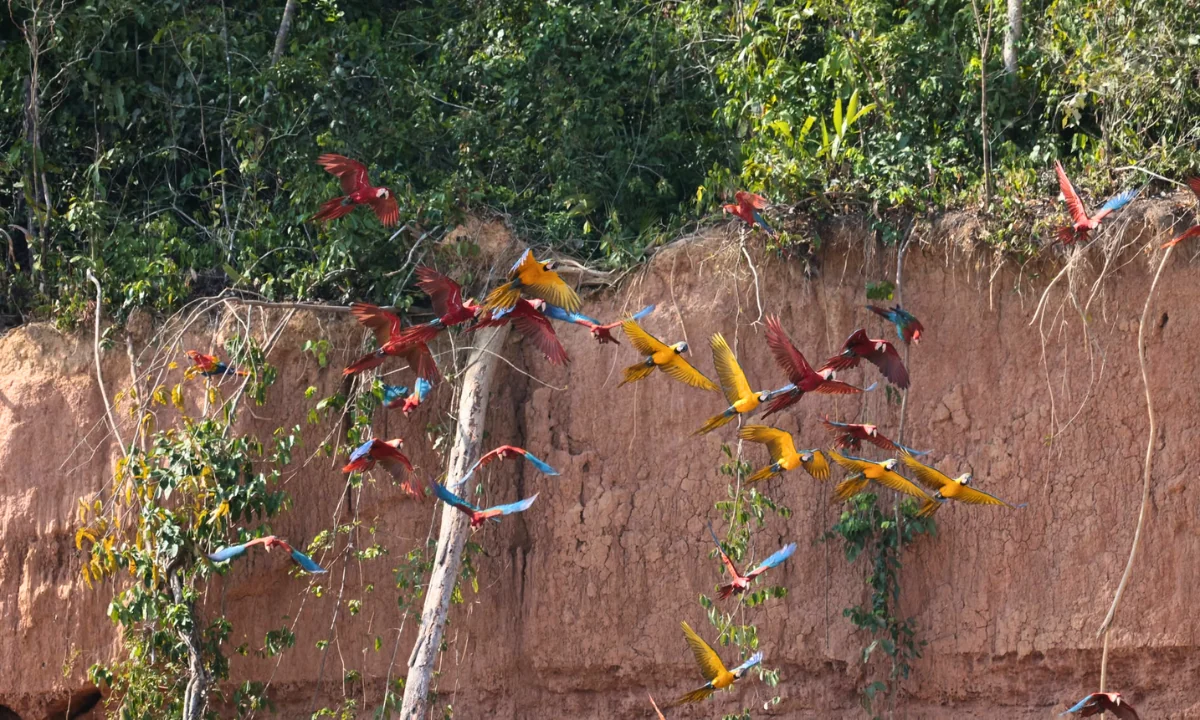
The best time to visit the macaw clay licks in Tambopata depends on weather conditions and bird behavior. Activity takes place throughout the year, but each season offers different conditions.
Dry Season (May to October)
Rainfall is less frequent, making rainforest excursions easier. Visits take place at dawn, between 5:00 and 6:30 a.m., when macaws, parrots, and parakeets gather to consume clay.
Rainy Season (November to April)
Rainfall is more frequent, and trails can become muddy, but the rainforest looks greener. At clay licks such as the Hermosa Clay Lick, it is possible to observe large flocks of macaws during certain breeding periods.
Essential Packing List for Macaw Watching in Tambopata
- Lightweight, long-sleeved clothing (light or neutral colors): Protects you from the sun and insects; avoid black or dark blue because these colors attract mosquitoes.
- Closed-toe, waterproof footwear: Ideal for walking through the rainforest.
- Insect repellent (with DEET or picaridin): Helps effectively protect you from mosquitoes deep in the rainforest.
- Hat and sunscreen: Essential for protecting yourself from the sun.
- Binoculars and camera: For observing and photographing macaws and other birds from a distance.
- Water bottle: To stay hydrated during excursions.
- Waterproof poncho: Useful in case of occasional rain.
- Other items: Passport/ID, small backpack, headlamp, cash, resealable waterproof bags (to protect your belongings from moisture), and personal toiletries.
This Tambopata Macaw Clay Lick travel guide will help you pack everything you need to enjoy your excursions comfortably and safely.
Tips for Your Trip to the Macaw Clay Licks
- Book in advance: Tours to Tambopata often fill up quickly, especially during the high season. Make sure to reserve your spot on the 3-, 4-, or 5-day tour ahead of time.
- Follow your guide’s instructions: Always stay on the trails and observation platforms to avoid disturbing the animals. Guides know the rules, such as not using flash in the clay lick area.
- Arrive before sunrise: Macaws arrive at the clay lick right around sunrise. Leaving very early, even before dawn, increases your chances of seeing more birds.
- Stay quiet and be patient: Macaws can be frightened by noise. Remain quiet while observing them and use binoculars to enjoy watching them without getting too close.
- Stay hydrated and protect your skin: The environment can be hot, so drink water frequently and reapply insect repellent and sunscreen regularly.
- Bring a small backpack: Use it to carry your essentials; you can leave the rest of your larger luggage at the agency or hotel in Puerto Maldonado. This makes boat transfers and hikes easier.
These tips, based on travelers’ experiences, will help you make the most of your Tambopata Macaw Clay Lick travel guide and ensure a safe and rewarding visit.
Frequently Asked Questions About the Tambopata Macaw Clay Licks
1. What species of parrots and macaws can I see at the clay licks?
At Tambopata’s clay licks, you can observe scarlet macaws, blue-and-yellow macaws, red-and-green macaws, parrots, and parakeets.
2. How do I get to the clay licks from Puerto Maldonado?
The usual way is to book an organized tour that includes ground transportation to the river port and a boat ride along the Tambopata River to the clay lick area.
3. Why do macaws eat clay at the clay licks?
Macaws consume clay to obtain minerals, such as sodium, that supplement their diet. This behavior may also help them neutralize certain compounds in their food.
Is a tour to the Tambopata clay licks suitable for families with children?
Yes, many excursions are suitable for families. It is recommended to choose an itinerary appropriate for the children’s ages and follow the guide’s instructions throughout the trip.
Plan your visit with this Tambopata Macaw Clay Lick travel guide. Contact us and book your excursion to enjoy watching macaws and parrots in the Amazon rainforest.